

Industrial cooling systems do more than move water from one point to another. They support uptime, process stability, equipment protection, energy efficiency and, in many facilities, mission-critical operations where downtime can quickly become expensive and disruptive.
That makes piping material selection a long-term reliability decision, not just a construction detail.
For engineers, EPC firms, facility owners and mechanical contractors, the question is increasingly practical: When comparing non-metallic alternatives to traditional metallic piping, how should CPVC and PP-RCT be evaluated for cooling water infrastructure?
Both materials can offer corrosion-resistant alternatives to metal piping. Both are used in commercial and industrial water applications. But they differ in joining methods, rigidity, fire and plenum considerations, installation workflow, maintenance planning and application fit. This article provides a practical framework for comparing CPVC and PP-RCT in industrial cooling systems, including process cooling loops, commercial cooling plants, hydronic systems and data center cooling infrastructure.
Why Cooling System Material Selection Matters
Cooling water systems often operate continuously. In industrial and commercial facilities, they may support production equipment, heat exchangers, chillers, condensers, pumps, data halls, electrical rooms or other essential infrastructure. As cooling demand increases and systems become more complex, the piping network must be designed for long service life, predictable performance and maintainability.
Piping material selection can influence several performance factors:
-
Corrosion risk
-
Scaling and fouling potential
-
Water treatment compatibility
-
Installation schedule
-
Access for future repairs
-
Fire and plenum compliance
-
Long-term maintenance requirements
-
Total lifecycle cost
In cooling applications, even small material-related issues can create broader operational challenges. Internal corrosion may reduce flow, affect heat transfer, increase maintenance needs or contribute to premature replacement. Installation complexity can affect construction schedules. Repair requirements can influence downtime planning. For facilities prioritizing uptime, the piping system should be evaluated as a core reliability asset.
Key Requirements for Cooling Water Infrastructure
Corrosion Resistance
Corrosion resistance is often one of the primary reasons facilities evaluate non-metallic piping. Metallic piping can be vulnerable to internal corrosion depending on water chemistry, oxygen exposure, treatment programs, flow conditions and system configuration. Once corrosion begins, it can contribute to scaling, fouling, leaks, under-deposit corrosion and higher maintenance demand.
For cooling systems, this matters because piping may be exposed to treated water, biocides, inhibitors, cleaning processes and variable operating conditions. Material compatibility should always be verified against the specific water chemistry and operating profile.
Temperature and Pressure Performance
Cooling water systems may include chilled water, condenser water and process cooling loops. While many operate at moderate temperatures, some experience temperature variation, elevated conditions during equipment cycles, or operating requirements that must be reviewed against the pipe manufacturer’s ratings.
For either CPVC or PP-RCT, engineers should avoid relying on generic material assumptions. Design should be based on the specific pipe manufacturer’s published pressure ratings, temperature derating factors, joining requirements and applicable standards.
Reliability and Uptime
Cooling systems in industrial plants, commercial cooling plants and data centers are often designed around availability. In mission-critical environments, piping failures can affect equipment performance, cooling redundancy and service continuity.
For this reason, engineers should evaluate not only whether a material can handle normal operating conditions, but also how it performs over time. Important questions include:
-
How does the material resist corrosion or degradation?
-
How easy is it to inspect, repair or modify?
-
What joining process is required?
-
What installer training is needed?
-
How does installation affect project risk?
-
What code or plenum requirements apply?
Fire and Plenum Considerations
Cooling water lines may be routed through mechanical rooms, ceiling spaces, risers or air-handling plenums. In these spaces, flame spread and smoke development characteristics can become important code considerations.
Corzan CPVC provides guidance on plenum-rated pipe and fittings, including flame spread and smoke developed considerations for appropriate listed systems. Engineers should confirm whether system being specified is approved for the installation environment, especially where piping is installed in air-handling spaces.
CPVC vs. PP-RCT: Material Comparison for Cooling Systems
Corrosion Resistance
Both CPVC and PP-RCT are commonly evaluated as corrosion-resistant alternatives to metal. In cooling water service, this can reduce concerns associated with rust, pitting and corrosion products that may affect flow or maintenance.
Corzan CPVC is often selected where resistance to corrosion and a broad range of chemical environments is important. For specific compatibility questions, engineers should review product literature and use available technical resources such as the Corzan Chemical Compatibility Chart.
PP-RCT also offers non-metallic corrosion resistance, but material compatibility should still be reviewed against the specific cooling water chemistry, disinfectants, cleaning agents and operating conditions. Engineers should request published compatibility data, pressure-temperature ratings and installation guidance from the pipe manufacturer.
Practical takeaway: Corrosion and chemical resistance should be evaluated in the context of the actual water treatment program, not only the generic material category.
Mechanical Properties: Rigidity vs. Flexibility
CPVC is generally considered a more rigid piping system, while PP-RCT is often associated with greater flexibility. This difference can affect supports, alignment, expansion planning, routing, hanger spacing and installer workflow.
Neither characteristic is inherently better in every application. A rigid system may be preferred where alignment, appearance, hanger design and stable layout are important. A more flexible system may be preferred where routing adaptability is valuable.
Practical takeaway: Engineers should consider how rigidity or flexibility affects the actual piping layout, support strategy, expansion compensation and access for installation.
Impact Resistance and Jobsite Handling
Industrial cooling systems are often installed in mechanical spaces with pumps, valves, chillers, structural steel, maintenance activity and other equipment. Impact resistance should be considered during shipping, installation, commissioning and operation.
For either material, piping should be protected from abnormal mechanical abuse, located with service access in mind and installed according to manufacturer guidance. Jobsite handling, storage temperature, support design and protection from equipment traffic can all affect long-term reliability.
Practical takeaway: Impact resistance should be reviewed as part of system layout and installation planning, not treated as a standalone material property.
Installation Differences: Solvent Cement vs. Heat Fusion
CPVC Installation
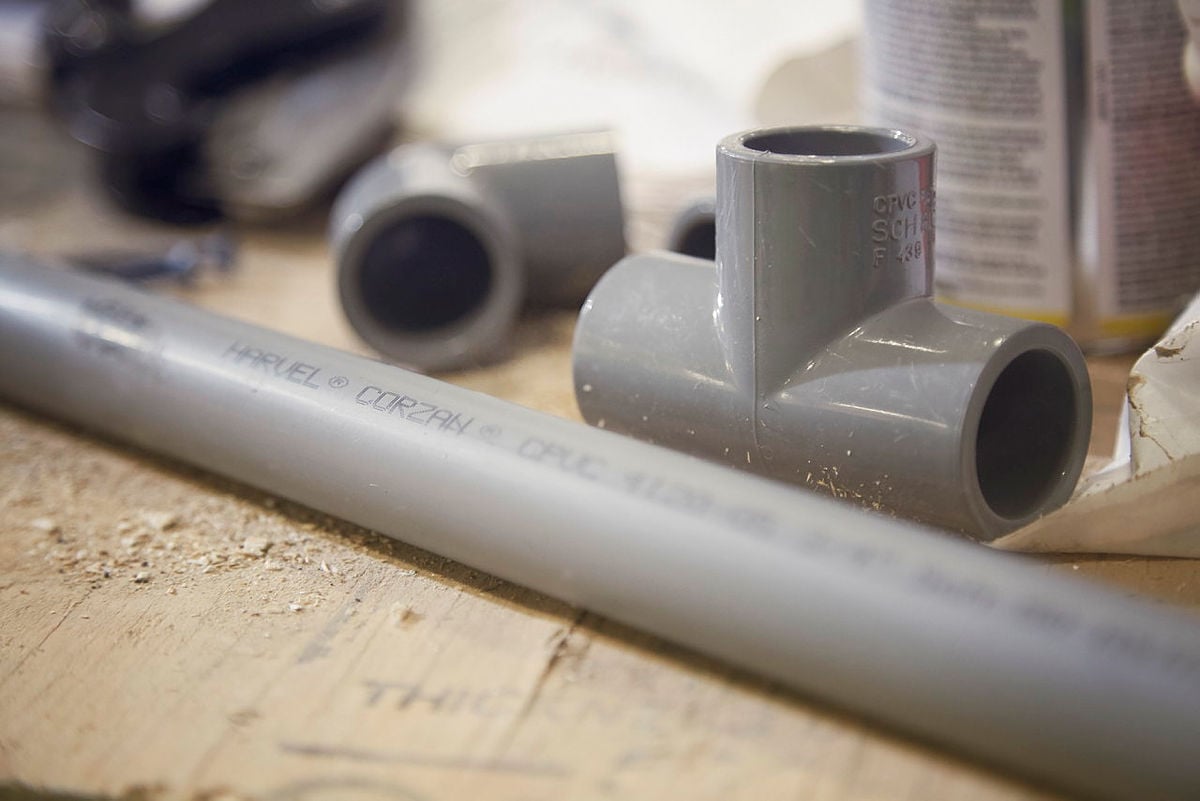
CPVC piping is commonly joined using solvent cement. For project teams, this can influence installation speed, labor planning and work sequencing. Solvent cement joining does not require fusion welding equipment, which may simplify deployment in some mechanical rooms, retrofits or active facilities. Proper surface preparation, cement selection, cure time and installation conditions remain essential.
PP-RCT Installation
PP-RCT is typically joined using heat fusion. Heat-fused joints can be effective when properly installed, but they require the right equipment, trained installers, controlled procedures and full access around the joint. In new construction, that workflow may be planned efficiently. In retrofit environments, the equipment footprint, access constraints and sequencing may require closer review.
Retrofits, Expansions and Active Facilities
Many cooling projects are not greenfield installations. They may involve upgrades to operating facilities, data center expansions, mechanical room replacements or phased construction.
In these environments, installation speed and service interruption planning matter. CPVC may be attractive where simplified joining, reduced tool requirements and easier modification are priorities. PP-RCT may be attractive where the project team is already standardized around fusion joining or where the design benefits from the material’s flexibility. The right answer depends on access, labor skill, shutdown windows, pipe size, and system layout.
Application Considerations by Facility Type
Industrial Cooling Loops
Industrial process cooling systems often prioritize corrosion resistance, serviceability and long-term reliability. Piping may support heat exchangers, process equipment, chemical treatment systems or utility distribution. Corzan CPVC is already utilized across many industrial pipe and fitting applications area for demanding industrial environments beyond cooling. Corzan industrial pipe and fittings.
For these environments, engineers should review chemical compatibility, operating temperatures, maintenance expectations and installation conditions before selecting CPVC or PP-RCT.
Data Center Cooling Systems
Data center cooling places special emphasis on uptime, redundancy and scalability. Cooling piping may be routed through white space-adjacent areas, mechanical galleries, rooftops, central plants and spaces where future expansion is likely.
In these projects, plenum requirements, installation sequencing, future modifications and leak-risk reduction should be part of the material evaluation. If piping is installed in air-handling spaces, engineers should verify code compliance and approved listings for the exact system specified.
Commercial Cooling Plants and Hydronic Systems
Commercial cooling plants often prioritize long service life, maintenance reduction and lifecycle cost. Material selection may affect pump room layout, expansion accommodation, corrosion control and future replacement planning.
For these systems, engineers should compare not only material cost but also installation labor, support requirements, maintenance needs, repair complexity and expected service environment.
Lifecycle Cost and Maintenance Considerations
Initial material cost is only one part of the decision. Cooling piping is a long-term asset, and lifecycle value depends on how the system performs after installation.
-
Material cost: Pipe, fittings, valves and accessories
- Installation cost: Labor, tools, equipment, training and schedule
- Maintenance cost: Inspection, treatment impacts, corrosion management and repairs
-
Downtime risk: Shutdown planning and consequences of failure
-
Modification cost: Ease of future expansions, tie-ins and repairs
- Compliance cost: Plenum, code, listing and documentation requirements
Corzan CPVC may reduce lifecycle costs where corrosion resistance, simplified joining, dimensional stability and plenum-rated options align with the application. PP-RCT may support lifecycle goals where heat fusion, flexibility and project team familiarity align with the design. The most reliable selection is the one that matches the facility’s operating conditions and maintenance strategy.
Conclusion: Match the Material to the Mission
CPVC and PP-RCT both offer corrosion-resistant alternatives to traditional metallic piping, but they should not be evaluated as identical materials. Each has different implications for installation, system design, maintenance, code compliance and long-term reliability.
For industrial cooling systems, the best material is the one that aligns with the operating conditions, installation realities and lifecycle objectives of the facility. CPVC may be a strong fit where corrosion resistance, dimensional stability, solvent cement joining, plenum-rated options and simplified maintenance are priorities. PP-RCT may be a strong fit where heat-fusion joining, flexibility and fusion-based project workflows are preferred.
Engineers should begin with the system requirements, not the material preference. By evaluating temperature, pressure, chemistry, installation environment, plenum needs, maintenance goals and lifecycle cost, project teams can make more confident piping material decisions for critical cooling infrastructure.

Quick Reference FAQs
What is the difference between CPVC and PP-RCT?
CPVC and PP-RCT are both thermoplastic piping materials, but they differ in material properties, joining methods and application considerations. CPVC is commonly associated with corrosion resistance, dimensional stability and solvent cement joining. PP-RCT is commonly associated with heat-fusion joining and greater piping flexibility. Selection should be based on temperature, pressure, chemistry, installation environment and code requirements.
Is CPVC or PP-RCT better for cooling water systems?
Neither material is universally better for every cooling water system. CPVC may be preferred where corrosion resistance, plenum-rated options, simplified joining and maintenance accessibility are priorities. PP-RCT may be preferred where heat-fusion joining and piping flexibility align with project requirements. Engineers should compare both materials against the specific operating conditions and installation constraints.
What should engineers consider when selecting cooling water piping?
Engineers should evaluate operating temperature, pressure, water chemistry, corrosion resistance, joining method, expansion control, support requirements, fire and plenum compliance, maintenance access, future repair needs and lifecycle cost.
Is CPVC plenum rated?
Some Corzan CPVC pipe and fittings have published plenum ratings. Engineers should verify the exact system, size range and code requirements for each project.
Which material is faster to install, CPVC or PP-RCT?
Installation speed depends on pipe size, crew experience, access, joining method and project conditions. CPVC solvent cement joining can reduce equipment requirements compared with heat-fusion workflows, while PP-RCT heat fusion can be efficient when trained crews and proper equipment are available.