
The corrosive chemicals used in the chlor-alkali industry often require specialty piping materials—but not in every area of the facility. A high-quality plastic like Corzan® CPVC can easily connect with other piping materials and can deliver reliable performance in many areas of a chlor-alkali facility. Here are some of the most frequently asked questions about CPVC in this industry. If you have additional questions or would like more information, please contact us to be connected with one of our piping material experts.
1. Which piping materials are compatible with chlorine and caustic soda streams? How do these chemicals impact different piping materials?
Some places within a chlor-alkali facility (such as those handling hydrogen gas) will require specality materials. Other common chlor-alkali chemicals like chlorine and caustic soda may be reliably conveyed by plastic piping like Corzan CPVC. The material has excellent corrosion resistance, lab testing and decades of field use in handling chlorine and caustic soda. These chemicals can aggressively corrode carbon steel and even some stainless steels and may attack certain metal alloys.
2. How does CPVC compare to metals and fluoropolymers for chlor-alkali chemical transport?
Not all CPVC products perform equally. Corzan CPVC was specifically engineered to perform reliably in highly corrosive, high-temperature industrial environments. Corzan CPVC has a much lower cost and lower installation complexity than most fluoropolymers. CPVC delivers excellent resistance to many chlor-alkali chemicals at a lower total cost.
3. Where can CPVC be used in chlor-alkali facilities?
Always consult with your CPVC manufacturer’s guidelines to confirm suitability. Corzan CPVC has been adapted for use in chlor-alkali: pipes, tanks, headers, manifolds, storage towers and custom-manufactured sheet and rod. It also has seen use for membrane technology.
4. What is the chemical resistance profile of CPVC when exposed to chlorine and caustic feedstock?
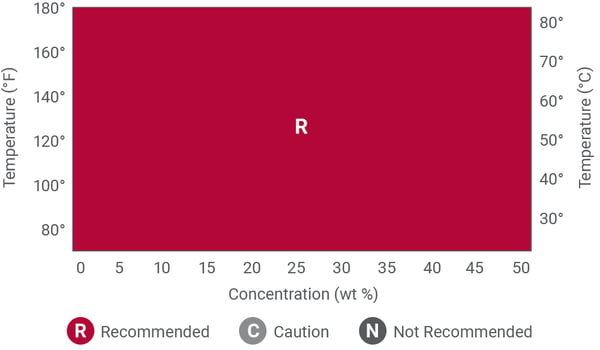
Within normal operating temperatures in chlor-alkali plants, Corzan CPVC demonstrates excellent resistance to both chlorine and to sodium hydroxide (caustic soda) and shows minimal swelling and no embrittlement when properly selected and installed.
5. Which piping systems reduce maintenance and downtime in chlor-alkali production facilities?
Thermoplastics and dual-laminate systems can reduce downtime and maintenance by reducing or eliminating the need for recoating or frequent inspections. Corzan CPVC is a thermoplastic formulated and shown to eliminate rust, scaling and internal fouling. It can deliver a longer service life with less maintenance than some metals and other plastics.